Bayshore Lands Singapore’s First $2 Billion Non-CBD GLS Site — Here’s What It Could Mean For Future Condo Prices
The bid signals strong developer confidence in MRT-linked East Coast housing demand and could translate into future residential prices averaging around S$3,000 psf.
A Frasers Property-led joint venture submitted the top bid of $2.128 billion, or $1,323 psf ppr, for Bayshore’s integrated GLS site, a non-CBD record.
Body
The tender to develop the only integrated project at Bayshore on the East Coast attracted a who’s who of some of the top developers in Singapore. Developers have been gearing up to bid for this prime site even before the government land sale (GLS) plot was launched for sale in March this year.
In the end, it took a five-way joint venture (JV) partnership between Frasers Property, Frasers Centrepoint Trust, Sunway MCL, Sekisui House, and Lum Chang Holdings to beat two other highly competitive bids – which also consisted of consortiums of developers.
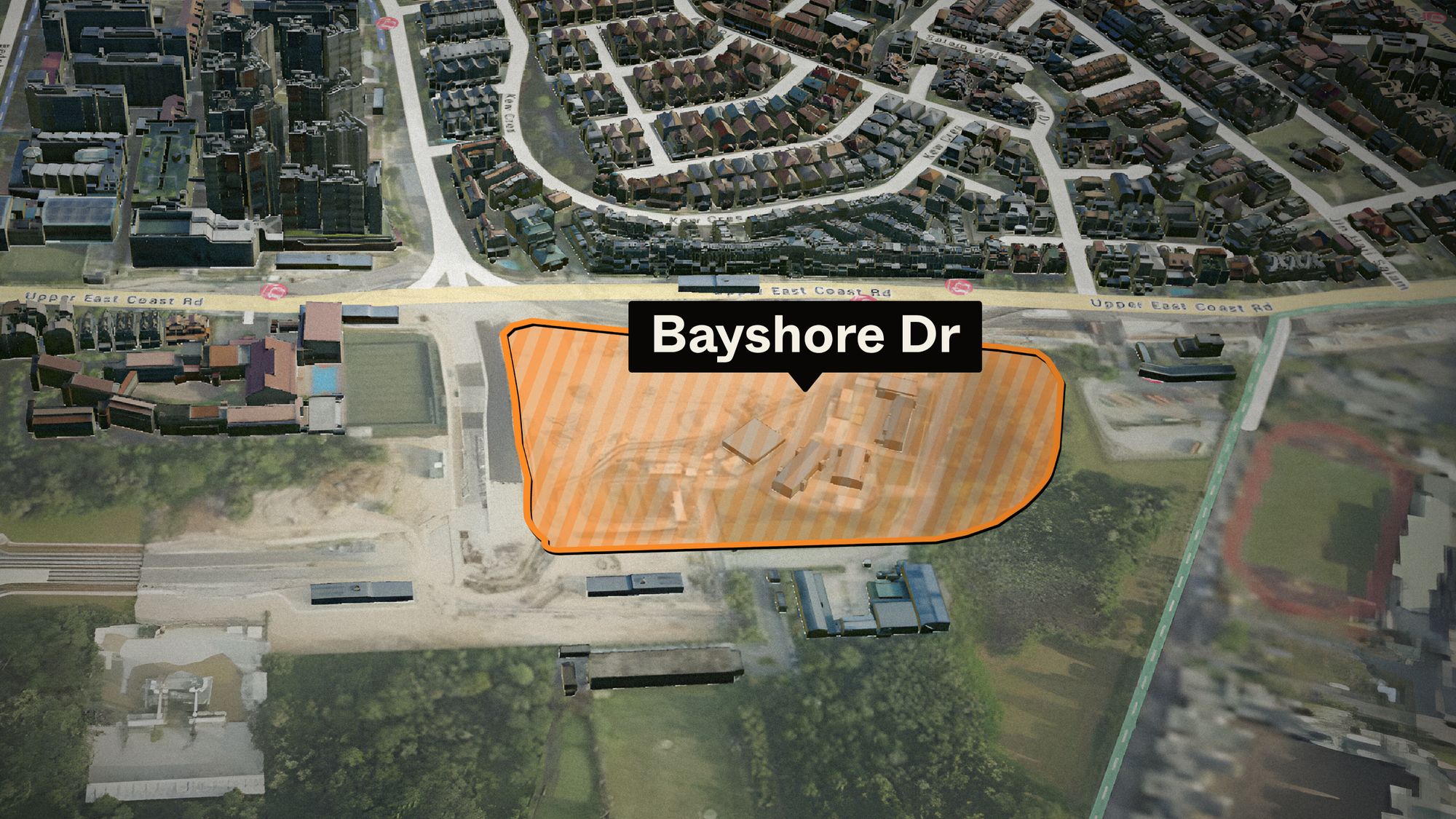
At the close of the GLS tender on July 15, the top bid of $2.128 billion was submitted by the Frasers Property-led JV. The top bid price translates to $1,323 psf per plot ratio (ppr) for the 618,500 sq ft site.
In a statement to the media, Soon Su Lin, CEO of Frasers Property Singapore, says that the consortium’s bid reflects their strong confidence in the long‑term potential of the Bayshore precinct and the East Coast region. “As the only mixed-use development and transit hub of Singapore’s new Bayshore waterfront precinct, this represents a defining opportunity to shape a highly connected, liveable and future‑ready community,” she says.
The bids received for this site match the expectations of many market analysts, who generally expected bids to range from $1.9 billion ($1,200 psf ppr) to $2.1 billion ($1,306 psf ppr).
This is also the highest bid price received for a GLS site since Malaysian property developer IOI Properties submitted its $2.569 billion bid for a white site at Central Boulevard, which has since been developed into IOI Central Boulevard Towers.
This is only the third time that a GLS site has attracted a top bid of over $2 billion, and it is the first site outside of the Central Business District (CBD) to cross that threshold. The other instance, besides Central Boulevard, is the Marina View/Commerce Street site back in 2007 that attracted a $2.02 billion ($1,409 psf ppr) bid. That site is now Asia Square Tower 1.
Turning back to the Bayshore Drive GLS, it is located next to the future Bedok South MRT station on the Thomson-East Coast Line and is the second GLS site released for private development by the government in the Bayshore precinct.
The first GLS site was awarded to SingHaiyi Group and its partner Chuan Capital in March 2025, after they had put in the winning bid of $658.89 million ($1,388 psf ppr). This site is being developed into the 515-unit Vela Bay, which sold over 72% of its units during its opening sales weekend and set an average selling price of $2,886 psf at the time.
Vela Bay is one of the best-performing new projects in 2026, after the 515-unit development shifted 72% of its units at its opening sales weekend.
No doubt the strong sales and high take-up rate that Vela Bay enjoyed strengthened the developer’s confidence in the recent Bayshore Drive GLS site, despite the expected $2 billion capital commitment.
The second highest bid was submitted by a consortium of developers comprising City Developments Ltd (CDL), Hong Leong Holdings, Hong Realty, and TID. They put in a $2.10 billion ($1,250 psf ppr) bid.
The third bid of $1.986 billion ($1,235 psf ppr) was jointly submitted by CapitaLand Development and UOL Group. This pair of developers already won the bid for an integrated development plot in Hougang Central in May, forking out $1.5 billion ($1,179 psf ppr) for that site next to Hougang MRT station.
The appeal of the Bayshore Drive GLS site definitely benefitted from its direct pedestrian access to Bedok South MRT station, which is expected to be operational by the end of this year. Mak also points out that approximately 75% of the allowable gross floor area (GFA) means that the residential component will likely be a mega-development with over 1,000 new condo units.
The relatively higher residential proportion compared to other elements of the future integrated development will reduce the development and financial risk, since three-quarters of the GFA will be sold to finance the project, says Mak.
At the same time, demand for new private homes in the East is not currently matched by the supply of development land, says Mak, adding that among the 63 private residential GLS sites launched by the government since 2021, only three sites are located in the East region.
The master plan for the Bayshore precinct was unveiled in 2023, and plans include about 10,000 new public and private homes. (Illustration: URA)
Moreover, the number of private residential GLS sites in the East has been less than the number of GLS sites launched in the Core Central Region (CCR) over the last five years. In the Bayshore precinct, about 70% of the planned 10,000 new homes will be HDB flats, with approximately 3,000 new condos in the pipeline.
Developers are keen to acquire land parcels that are directly connected to an MRT station, and mixed-use projects built on such plots tend to be sought-after among homebuyers, says Wong Siew Ying, head of research and content at PropNex Realty.
Recent examples of integrated developments that have recorded high take-up rates include Pinery Residences, which shifted nearly 93% of its 588 units when it was launched in March 2026, and Parktown Residence, which sold 87% of its 1,193 units over its launch weekend in February 2025.
“The healthy track record of sales at well-located mixed-use developments may give developers greater conviction to bid competitively for the Bayshore Drive site despite its sheer size. Furthermore, the positive market response to Vela Bay’s recent launch may give developers added confidence, with its average transacted price of $2,886 psf offering a useful gauge of the price levels acceptable to buyers in this locale,” she says.
She adds that the sizeable commercial component will help to address demand for retail offerings in what may be perceived as an under-served catchment in this part of the East Coast, given the lack of large-scale malls in this vicinity.
Most of the major recognisable shopping malls in the East Coast area are typically found in the Marine Parade neighbourhood, as well as the smaller retail shophouses in Joo Chiat.
For Frasers Centrepoint Trust (FCT), which owns and manages some of the most recognisable malls in Singapore like NEX and Tampines 1, participating in this tender would be a compelling opportunity to establish a strong foothold in this developing precinct.
“The project allows FCT to harness development as a new growth driver at an attractive yield, while creating a pipeline for future acquisition,” says Richard Ng, CEO of the Manager of Frasers Centrepoint Trust. It’s also aligned with its mandate of owning and managing well-located suburban retailassets anchored by strong transport connectivity and growth potential.
If the GLS site is awarded to the Frasers Property-led JV, the bid price of $2.128 billion – or $1,323 psf ppr – could translate to a possible average selling price of more than $2,900 psf at the future residential development, according to estimates by PropNex.
Reclamation works that signal the start of the Long Island plan will begin at the end of this year. (Map: URA)
With development of the Bayshore precinct advancing – several Build-To-Order projects have already been launched so far – the reclamation works that will give rise to the Long Island plan provide an additional long-term backdrop for the investment potential of the future integrated project, says Alice Tan, Head of Consultancy at Knight Frank Singapore.
Preliminary plans for this decades-long reclamation project involve roughly 800 ha of reclaimed land stretching from Marina East to Tanah Merah. This will create additional land for future development, a new reservoir, extensive waterfront parks and coastal protection infrastructure.
It is also part of a long-term positioning of the East Coast corridor as a major waterfront district, and developers likely viewed this as a future structural advantage that can maintain the desirability of Bayshore over an extended timeframe, says Tan.
The consultancy estimates that – based on prevailing construction costs, financing costs, integrated development complexity and current new-launch pricing benchmarks – a reasonable estimate would place future residential launch prices to start from S$2,900, and average around S$3,000 psf.
Some of the most premium units with sea views, higher floors and integrated transport access could exceed S$3,200 psf.