How St. Regis Residences owners reinvigorated their ageing luxury asset for the long term
The owners’ substantial collective investment signals confidence in repositioning the ageing branded residence and may support its appeal and value relative to other District 10 luxury condos.
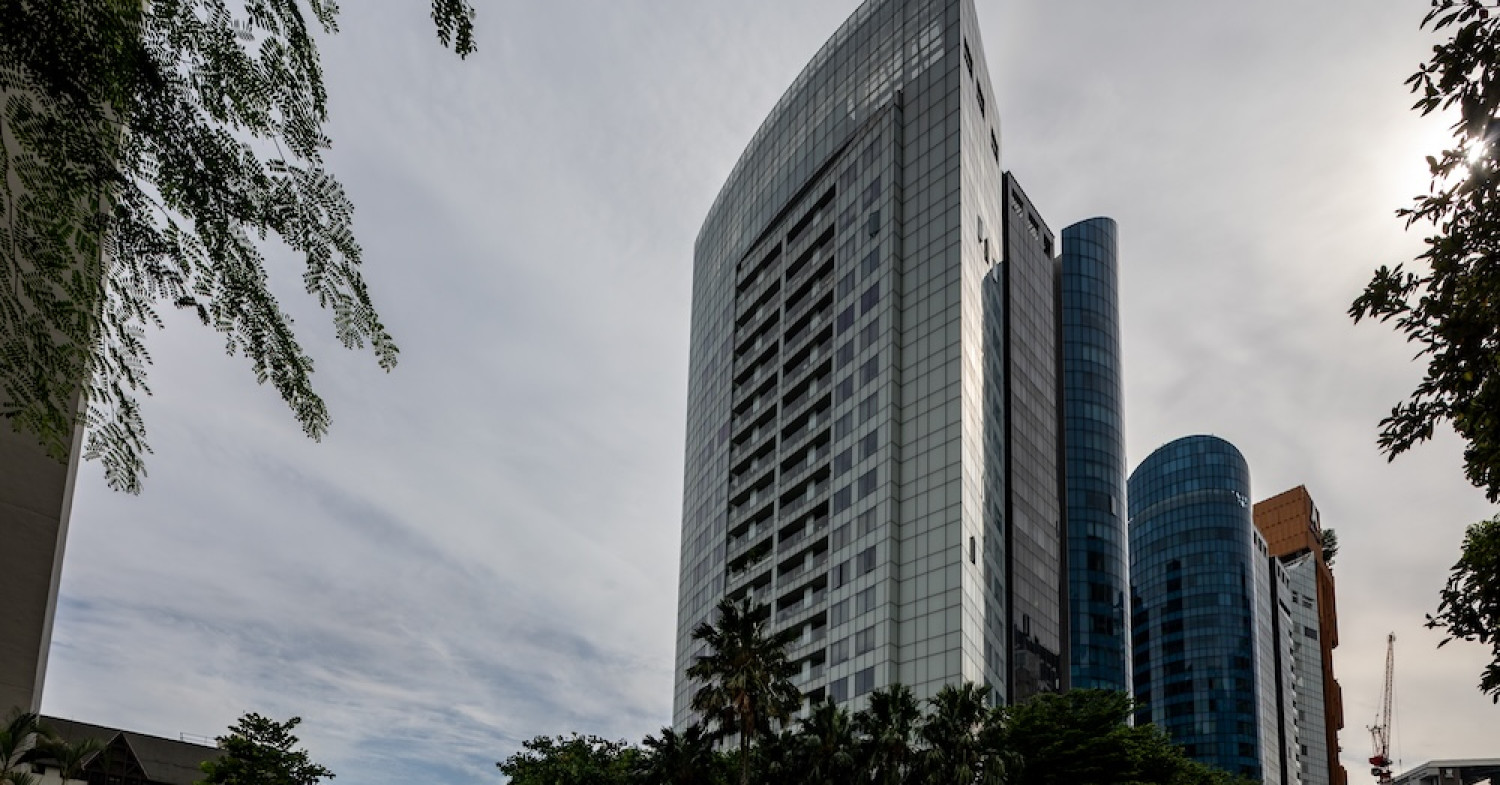
Owners of the 173-unit St. Regis Residences Singapore completed a multi-year asset enhancement initiative costing about $12 million, including consultancy fees.
Body
More than a decade after St. Regis Residences Singapore was completed in 2008, parts of the luxury condo were beginning to show their age. By 2020, council members of the Management Corporation Strata Title (MCST) decided it was time to act.
An asset enhancement initiative (AEI) was proposed for the 173-unit development on Tanglin Road.
Among the most active council members was retired ambassador Jaya Mohideen — Singapore’s first female career ambassador. She was also among the early buyers when St. Regis Residences launched off-plan in June 2006. She had purchased a unit for her daughter and sits on the council as her proxy.
Developed jointly by City Developments Ltd (CDL), Hong Leong Holdings and TID — a joint venture between Hong Leong Group and Mitsui Fudosan — St. Regis Residences was billed at launch as the first St. Regis residential development in Asia. It is linked to the adjoining 299-room St. Regis Hotel Singapore.
Read also: Sherman Kwek maps out CDL’s next three years: $5 bil to invest, $6 bil to divest
Several council members surveyed residents in April 2020 on what they wanted improved. Beyond the wish list, however, were more fundamental concerns. The sinking fund was considered underfunded, while units at St. Regis Residences were trading at a discount to some of the other luxury condos in prime District 10.
“We thought that perhaps we were not investing enough in the property, and it was getting a bit dated,” says council member CM Rajoo, who was subsequently appointed chairman of the AEI committee.
At the time, the sinking fund stood at just $1 million, according to Rajoo. The MCST subsequently raised about $6 million over a year, raising it to $7 million.
The multi-year AEI — which included overhauling the common areas, repurposing underused facilities, and aligning the development with St. Regis brand standards — ultimately cost about $10 million, excluding consultancy fees, says Rajoo. Including fees, the total was about $12 million.
More significantly, it showed how far the owners were prepared to invest collectively to keep their homes relevant and, ultimately, protect their value. “We decided to focus on things we could do to elevate the project,” Rajoo says.
Bringing Marriott on board
Marriott International, which added St. Regis to its portfolio after acquiring Starwood Hotels & Resorts in 2016, was involved with the entire AEI exercise to ensure that brand standards were fully met.
Read also: CDL to invest $5 bil, divest $6 bil of assets, optimise hospitality portfolio over three years
Marriott has a renovation programme for its branded residences worldwide. Under the programme, soft furnishings are typically refreshed every seven years, while hard finishes are refreshed every 14 years. St. Regis Residences Singapore had not undergone a major refurbishment since completion and was due for a makeover.
In November 2020, Marriott International’s global residential operations team visited the site and recommended improvements, including maintenance standards and repairs to common areas. It also proposed introducing preventive maintenance and engaging Marriott Global Design to develop the scope of works.
With Marriott Global Design involved, the AEI committee selected British interior design and architecture studio 1508 London from a list of approved firms. Its luxury residential portfolio includes No. 1 Grosvenor Square, The OWO Residences by Raffles and Regent’s Crescent in London.
The committee also engaged RSP Architects Planners & Engineers, the original project architect for St. Regis Singapore, to ensure the proposed works complied with local building requirements. COEN Design International was appointed the landscape architect, and Light Collab the lighting consultant.
Everyone involved in the AEI, including the architects and designers, underwent a detailed presentation on the St. Regis brand DNA. The aim was to ensure the refreshed development reflected the brand not just in its design, but also in details such as scent, toiletries, and music in the lobby and gym.
Hands-on involvement
When Rajoo presented the proposed AEI programme at a town-hall meeting in October 2021, it received 95% support from owners. The next 12 months were spent on detailed design and planning before the project went to tender.
Read also: Amberwood at Holland sells 11% of units on launch weekend, averaging $3,019 psf
Sunray Woodcraft Construction, part of Sunray Group, was appointed the main contractor in 2022. One of Singapore’s largest fit-out firms, Sunray has worked on projects including the restoration of Raffles Hotel Singapore, and the interior fit-out of Marina Bay Sands and Shangri-La Singapore.
For the council, that experience mattered because the works had to be carried out within an occupied luxury residence.
The project proved more complicated than initially envisaged. Construction began in February 2023 and was originally scheduled for completion in March 2024. The official handover was delayed until August 2024, with defect rectification continuing into 2025.
The committee became heavily involved on site. Rajoo says he walked the grounds daily and found himself debating seemingly minute details with contractors, down to the dimensions of the architraves.
Their hands-on involvement reflected how closely the owner-occupiers were engaged with an AEI whose outcome they and their neighbours would have to live with every day.
Rethinking the arrival experience
One area of improvement was the sense of arrival. Previously, the guard post sat in the middle of the entrance, creating a single entry and exit point for residents and visitors and sometimes causing bottlenecks.
Relocating the guardhouse further inside allowed for two car lanes: one for visitors stopping at the guard post and another for residents to proceed directly to the car park. The work was complicated because the fire command centre and cabling had to be moved, Rajoo says, but it solved a longstanding functional issue.
The team also tackled other shortcomings at the same time. A new canopy provides better shelter between the residential towers, while seating was added to the arrival lobbies. The concierge centre was upgraded, and the network of narrow ground-floor passageways — which Rajoo describes as “a maze of corridors” — was widened and given clearer identities through improved lighting and finishes.
The development has three main lift lobbies and 10 private lift lobbies on the first level. Each private lift lobby was given a distinct identity through its artwork and mantelpiece.
Not every design idea survived. The team at 1508 London had proposed a large monolithic sculpture resembling a rippled metal sheet at the entrance. The committee chose instead to introduce Traveller’s Palm plants, similar to those at Raffles Hotel Singapore.
“We wanted more vegetation to make it warmer and more welcoming,” says MCST chairman Aditya Vikram Lodha.
The choice illustrates the owners’ unusually hands-on role: they were not simply approving a design package, but also questioning how individual elements would feel for residents returning home every day.
For the committee, an important principle was that the enhancements should integrate seamlessly with the original development. The objective, says Rajoo, was to make the old indistinguishable from the new.
Making old spaces relevant again
The AEI also involved rethinking how people used the facilities. “Ultimately, it’s about making the spaces relevant,” Lodha says. “What was relevant 20 years ago may not be relevant today. There is no point having facilities that no one uses.”
Of the development’s 11 key amenities, eight were either upgraded or replaced.
At the top of residents’ wish list was to have a larger gym. That means extending the gym over part of the pond. To do that, the pond had to be drained, and support structures built below. The koi were temporarily housed at a koi fish hotel for 12 months during the works.
The result is a state-of-the-art gym that is now double its original size and features the latest gym equipment.
While the koi pond was being rebuilt, the old filtration system was also replaced with a new one. The yoga deck next to the koi pond was extended to conceal the new filtration system.
Meanwhile, an underused landscaped area next to the yoga deck was converted into a lawn, which is now used as an exercise and children’s play area.
The former private lounge was upgraded and renamed The Drawing Room. It is now used for informal gatherings and meetings. The little-used cigar room became The Library and was expanded to create a brighter, more flexible room.
The idea to incorporate workspaces into The Library emerged during the Covid pandemic, when residents wanted somewhere outside their apartments to work. Mohideen visited WeWork and other co-working spaces for ideas, but instead of placing a large communal table in the middle, she suggested orienting the workstations outwards to take advantage of the views of the greenery and the pool.
The Library is now popular with residents working remotely as well as students doing their homework, Mohideen notes.
“Since the walls were changed to glass, there is more light, the room is more cheerful, and the space is well used by the residents,” Lodha adds.
The playground was rebuilt to meet current safety codes. A pedestrian path was created for residents who want to go to the hotel. They no longer have to cut through the children’s playground to do so. The pool area was also upgraded, with topiary added to provide more privacy from the adjoining hotel restaurant.
The AEI was also a chance to address defects and shortcomings in the original development. “This wasn’t just a renovation,” says Rajoo. “We decided to make good on all the issues that had been identified over the past 10 to 12 years, and fix them systematically.”
Putting St. Regis brand back into St. Regis Residences
While some changes were primarily functional, others were intended to strengthen the link between the residences and the St. Regis brand.
The interiors of St. Regis Singapore draw on the brand’s “Metropolitan Manor” design language, rooted in the character of the original St. Regis in New York. Meanwhile, its more contemporary exterior reflects the brand’s “Glass House” aesthetic.
Rather than reproducing the hotel’s Metropolitan Manor aesthetic, 1508 London reinterpreted it in a contemporary-classic style for the residences.
The palette includes natural stone, white marble, limestone and travertine, with bronze detailing and formal architectural elements such as mantelpieces and architraves.
Marriott also encourages individual St. Regis properties to reflect their local identity. At the residences, the committee adopted botanical motifs inspired by Singapore flora.
The local connection extended to artworks in the lobbies and common areas by renowned Singapore artists that the MCST acquired.
Among the more distinctive additions are the handcrafted Herbarium crystal chandeliers featuring Singapore-inspired pressed flowers and foliage, by Czech glassmaker and design brand Lasvit.
The lobby entrances also feature Lasvit-designed crystal screens bearing the St. Regis plaque. The St. Regis Singapore hotel's scent and music were also introduced into the residences' lobbies.
“These are soft touches that really transform the place from being ordinary to extraordinary,” MCST chairman Lodha says.
Not everything old was discarded. Some of the original Poltrona Frau furniture in The Drawing Room and The Library was retained and reupholstered after the committee recognised its quality. New pieces from the same Italian brand were added where necessary.
The guiding principle, Rajoo says, was not to replace everything for the sake of appearing new, but to preserve what was worth keeping and spend where quality mattered.
Next phase
The scope of the project also grew to address ageing infrastructure and defects where possible. More recently, the MCST spent close to $750,000 on the pneumatic waste system, and the council is already planning for the next capital-expenditure cycle.
“We recognise that the building is ageing, and that we need to change the lifts in the next couple of years,” says Lodha. “We don’t want to wait until a lift collapses and then say, ‘Oh, we should do something.’”
Knight Frank manages the estate on behalf of the MCST. Han May Leng, the residential general manager at St. Regis Residences, joined in 2023, just as the AEI works began.
Having witnessed the transformation firsthand, Han says the AEI combined design improvements with practical changes to create spaces residents can enjoy in their daily lives.
With the major works now completed, she sees the management team’s role as ensuring those renewed spaces are maintained to the same standard.
From hardware to service
The next phase of renewal could include upgrades to the tennis court, function room (The Astor Room) and barbecue area.
With most of the major physical works behind them, the council is shifting its attention from the property’s “hardware” to what Lodha calls its “software” — the services and experiences offered to residents.
An example is the 17 concierge staff at St Regis Residences, who are trained by Marriott, says Mohideen. They assist residents with many things — from carrying luggage or groceries to party planning and travel arrangements.
“These personal interactions and high levels of service are what set St Regis apart from other high-end condos,” says Mohideen.
The staff also provide umbrellas when it rains, and handle deliveries for residents. “I travel a lot, and they will text me to let me know when I have a package, and ask me whether I would like it delivered to my apartment, or left for someone in my office to collect it,” says Lodha.
Rajoo says the concierge staff also help with decorations for birthday parties and Christmas gatherings, and even help clear up afterwards.
For Lodha, the greatest convenience is not having to carry his own luggage. “We all used to carry our own bags up to our apartments,” he says. “Now, when we arrive, we just leave them with the concierge because we’ve got used to having someone else carry our bags.”
Other smaller touches are also being considered, such as offering residents cold beverages and towels in the common areas. “The idea is to build that sense of appreciation where residents feel welcomed, wanted and special,” says Lodha.
The long game
For the owners, the AEI was ultimately about more than refreshing a development that had begun to show its age. It was also about deciding what kind of development St. Regis Residences should be as it enters its next decade.
Protecting the long-term value of their homes was part of that equation from the outset. Marriott describes refurbishing its branded residences as a way to strengthen brand equity, improve the owner experience and protect owners’ investment.
“In several ways, the council went beyond Marriott’s brand standards to achieve the best outcome,” says Mohideen.
The council also feels St. Regis Residences has not received the market recognition it deserves.
Only three transactions have taken place at St. Regis Residences so far this year, based on caveats lodged. In March, a fifth-floor unit of 2,594 sq ft changed hands for $6.485 million ($2,500 psf), while a 2,153 sq ft unit on the ninth floor sold for $5.5 million ($2,555 psf). The latest transaction, in September, was for a 2,142 sq ft unit on the 16th floor that fetched $5.8 million ($2,708 psf).
“As a council, we are acutely conscious that [St. Regis Residences] has not been given as much love as it should by the market, and therefore, that’s something that we are focused on rectifying,” says Lodha.
The approach has also made the council more conscious that maintaining an ageing luxury development cannot be a one-off exercise.
For now, the neighbouring construction for the redevelopment of Tanglin Shopping Centre may inconvenience nearby residents. But once it is complete, they will have access to new amenities, including “a massive performing arts theatre and art museum”, says Lodha. “So it is a short-term pain, and I would hope that it results in long-term gain.”
This perspective also underpins the AEI — accepting short-term disruption and continued investment to preserve the appeal and relevance of St Regis Residences over time.