Little India GLS Site Tender Draws 7 Bids, Top Bid $35.3M
The unusually wide bid gap signals divergent views of restoration costs and redevelopment potential, with the eventual strata-landed or SA2 format targeting a specialised market.
YK Land submitted the highest of seven bids for the Little India conservation site at $35.3 million, or $962 psf, 48.1% above the runner-up.
Body
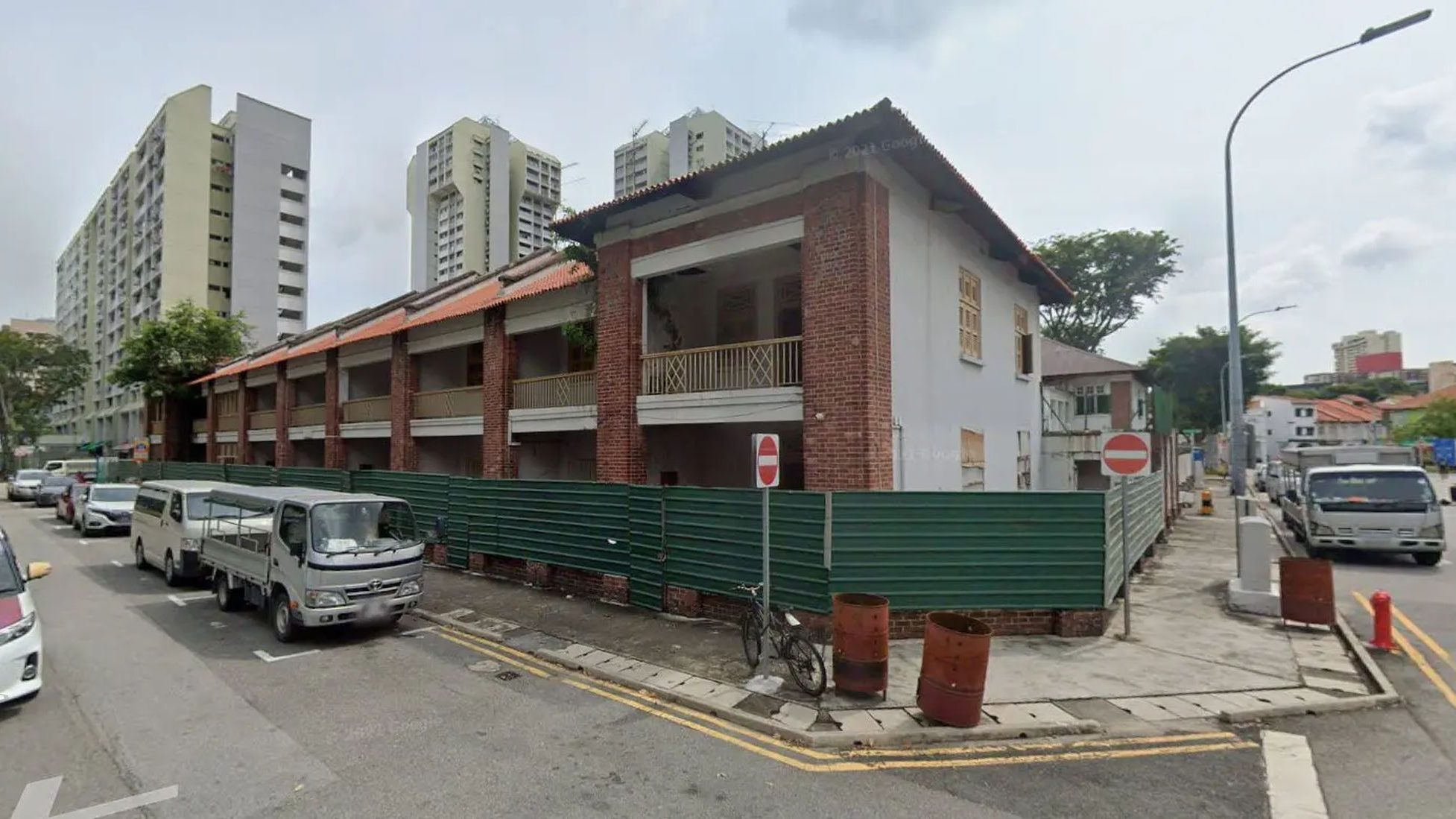
The tender for a small cluster of 18 conservation terrace houses in Little India attracted a higher-than-expected number of bids, with a surprising party emerging as the top bidder.
We covered this unassuming government land sale (GLS) at Chitty Road and Veerasamy Road when the public tender was launched on March 25. It caught our attention because it offered the chance for new strata landed houses or long-stay apartments in Little India.
Considering the other residential GLS sites that the government is offering developers this year, I had expected this 36,672 sq ft site to catch the attention of a handful of local boutique developers. The added complexity of preserving the building’s heritage value would also turn off other potential bidders, or so I had thought.
Instead, we saw YK Land submit the top bid of $35.3 million at the close of the tender on July 28. The bid price translates to $962 psf on the site area.
In total, seven bidders tossed their hat into the ring for a chance to acquire this cluster of conservation terrace houses. But the $35.3 million bid by YK Land stood out to me because of much more than the second- and even third-highest bids.
A joint venture between Coninit Pte Lte and SEEDoE Ventures – reportedly an affiliate of Kimen Group – submitted a $23.8 million ($650 psf) bid, a difference of 48.1% compared to the top bid. Meanwhile, the third highest bid of $23.7 million ($646 psf) was put in by RPC One.
| Tenderer | Bid Price ($) | Bid Price ($PSF) | |
| 1 | YK Land | 35,288,000 | 962 |
| 2 | Conint & SEEDoE Ventures | 23,828,558 | 650 |
| 3 | RPC One | 23,700,000 | 646 |
| 4 | Mezzo Properties | 16,380,000 | 447 |
| 5 | Haus @ Central | 15,555,000 | 424 |
| 6 | Westwood Hostel | 12,000,000 | 327 |
| 7 | Bogen Venture | 10,600,000 | 289 |
At this time, we don’t know if YK Land will write in to formally seek approval from URA to position the site as a new strata landed housing development, or if we will see the site repositioned as a form of long-term accommodation under the Serviced Apartment II (SA2) scheme.
During the tender, URA did say that either residential typology would be acceptable.
Mohan Sandrasegeran, Head of Research & Data Analytics at SRI, says that the final development concept will likely depend on the developer’s assessment of market demand, commercial viability and long-term investment strategy.
There’s a good chance that the wide spread in terms of the bid prices reflects the different assessment of the site’s redevelopment potential and eventual end product. “Bidders were likely to have arrived at different land valuations based on their preferred development strategy, restoration costs and target market,” says Sandrasegeran.
This GLS site is unique because it is fundamentally a conservation and adaptive reuse project, rather than the greenfield development that we usually see in the GLS programme. We know that YK Land will be expected to retain and restore the existing Art Deco terrace houses, which were built in 1927.
As Sandrasegeran points out: “The development quantum here is largely determined by the existing conserved building envelope. Developers are required to retain much of the original architectural character, including the building profile, roof form and key façade elements, while undertaking restoration works in accordance with URA’s conservation guidelines”.
We have seen several examples of developers incorporating conservation buildings into a redevelopment project. But for a small land size like this, the restoration and conservation costs coupled with the price of a new build would make most seasoned developers baulk.
The requirements essentially limit the redevelopment flexibility while increasing construction complexity and elevating the project’s cost certainty risk.
However, there are several strong locational attributes that would make this a compelling project. If it is redeveloped under the SA2 scheme, we could see 36 new serviced apartment units enter the housing mix in this part of Little India.
This type of accommodation has a minimum stay of three months, which would appeal to professionals, expatriates and other residents seeking medium to longer term accommodation within a city-fringe neighbourhood. Serviced apartments also generally reap a higher per unit yield, so YK Land could be banking on this property generating recurring rental income.
If YK Land opts to turn the site into a collection of strata landed homes, the resulting product may be one of the most exclusive collections of conserved heritage homes in Singapore, suggests Sandrasegeran.
Although only 18 of these homes would be allowed, given the tender conditions, the rarity of owning a restored heritage property within the Little India Historic District may appeal to affluent owner-occupiers and collectors seeking highly distinctive homes that are seldom available in the market.
“With relatively few new landed developments being introduced in Singapore, particularly within established city fringe locations, the combination of heritage conservation and modern residential use may create a unique value proposition for affluent owner-occupiers,” says Sandrasegeran.
We expect the official announcement of the tender award from URA for this site to come within the coming weeks. If it does go to YK Land, it will certainly be an interesting case to see how this developer tackles this niche conservation residential opportunity.