Singapore Is About To Double The Size Of Sentosa — With A New Island, Tram Network And Waterfront Attractions
Improved access and more public experiences could raise local visitation and reinforce nearby Greater Southern Waterfront residential and mixed-use areas as lifestyle destinations.
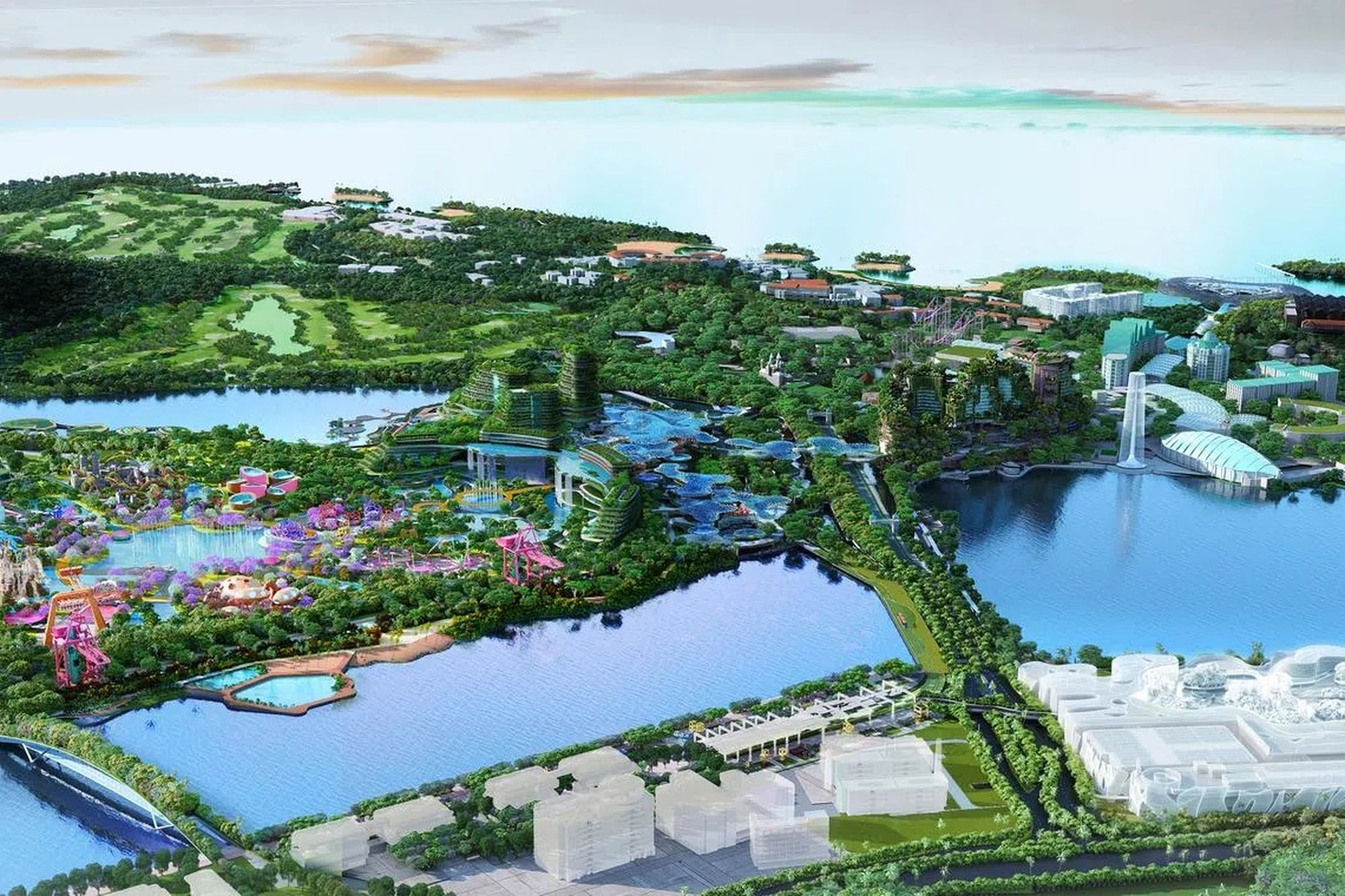
The 20-year Greater Sentosa Master Plan will integrate Sentosa with 120-ha Pulau Brani, adding transport, nature and waterfront attractions progressively from the early 2030s.
Body
The next transformation of Sentosa Island will incorporate the neighbouring 120-ha Pulau Brani into a new recreational destination. Billed as the Greater Sentosa Area, the master plan for this revitalisation and expansion of Sentosa Island was unveiled on July 3.
The overhaul of major parts of Sentosa Island is much needed, especially as other competing recreational areas throughout Singapore have sprouted in recent years, such as the recent transformation of the Mandai Wildlife Reserve.
It has been more than 15 years since the launch of Universal Studios Singapore, and in my opinion, some of Sentosa’s allure has faded since its glory days during the 1990s and early 2000s. It feels to me like most Singaporeans are ‘done’ with Universal Studios, the cable car, and the beaches at Sentosa.
(Probably multiple times, for those of you in your 30s or older.)
I say, it’s about time Sentosa had a facelift and much has been promised as part of the Greater Sentosa Master Plan (GSMP). This 20-year blueprint will transform Sentosa and Pulau Brani – where the port facilities will be moved to Tuas in 2027 – into a larger, better-connected destination. This also comes with new attractions that will be progressively completed from the early 2030s.
The overall rejuvenation concept for Greater Sentosa
The integration of Pulau Brani as part of Sentosa Island was originally unveiled back in 2019 during the National Day Rally speech by then-Prime Minister Lee Hsien Loong. At the time, it was known as the Sentosa-Brani Master Plan.
The Greater Sentosa Master Plan shares many elements of that initial plan, including integrating both islands into a single cohesive destination. According to the Sentosa Development Corp (SDC), a statutory board under the Ministry of Trade and Industry, the revitalised lifestyle destination will see twice as many visitors compared to Sentosa today.
SDC is also studying plans for floating boardwalks that connect Sentosa’s offshore islets, allowing visitors to “hop” between them easily. (Picture: SDC)
Moreover, the beaches, forests, and stretches of waterfront will be designed to flow naturally into one another, which will strengthen it as a cohesive lifestyle destination.
There are three main pillars of the master plan that have been unveiled so far.
The first is improved connectivity. The existing Sentosa Express monorail will eventually be replaced with a higher-capacity, tram-based system centred around the Island Heart Transport Hub. This will become the main gateway into the lifestyle and recreational precinct.
The SDC is also studying the possible use of water taxis and additional waterfront links, improving the connectivity between Sentosa, Pulau Brani, and the mainland.
Next, the master plan leans heavily into Sentosa’s natural landscape. This will be a welcome change from the focus on building attractions like Universal Studios, novelty hotels, and beach events.
One of the first projects expected to open is the Imbiah Lookout Walk, which is set to open in the early 2030s. This is a sheltered, elevated forest canopy walk that will link the existing Sensoryscape to the upcoming Imbiah Lookout.
Other ideas being explored include treetop dining, sunrise and sunset beach clubs, and rejuvenated beachfronts which can be integrated with new coastal protection measures.
Finally, there are plans for more attractions which are designed to encourage longer visits. These include the Sensorium, a new beachfront, indoor attraction and event space, and the previously announced Imbiah Canopy.
An artist’s impressions of the new attractions in Brani West. (Picture: SDC)
The Sensorium is a multi-purpose venue for festivals, concerts, and other events. But it’s also integrated with green spaces to keep the building naturally cooler. The Imbiah Canopy, which is atop Mount Imbiah, will serve as a vantage point overlooking Greater Sentosa. Besides a panoramic view, it will also have F&B outlets, retail spaces, and event spaces.
Beyond all this, Brani West has also been earmarked for what SDC describes as “game-changing” attractions, although details remain under wraps.
What does this mean for the Sentosa experience?
Our perspective is that the Greater Sentosa Master Plan represents an evolution in Sentosa’s position as one of Singapore’s recognisable lifestyle and recreational destinations.
In its past, Sentosa seemed more like a collection of “superstar” attractions than a coherent destination. But the new master plan doesn’t rely on a handful of high-end novelties, and instead makes the islands themselves the attraction.
Beaches, forests, waterfronts and lifestyle spaces will all flow into one another. The aim is that this will encourage visitors to spend time exploring and relaxing on the two islands, instead of just visiting a star attraction or event and then heading home
We also feel that – although it wasn’t explicitly said – these moves will counteract a inching perception among locals. Over the years, Sentosa has developed a reputation as a place where every outing comes with a hefty price tag.
It is fair to say that for some Singaporeans, a trip to Sentosa often means buying tickets to a theme park, booking a staycation, or visiting a beach club. In short, activities that may be fun, but which are probably not light on the wallet.
By introducing more public spaces and free-to-enjoy experiences – such as the canopy walks, nature trails, waterfront promenades and the proposed islet-hopping route – this might change this perception. Greater Sentosa could be a place where people visit just to stroll, exercise or spend an afternoon.
An artist’s impression of an aerial view of the Greater Sentosa precinct. (Picture: SDC)
This ties in well with SDC’s plan to attract more locals to visit the islands. Between April 2024 and March 2025, SDC noted that Sentosa welcomed 16.9 million visitors. But of those visitors, around 80% were international visitors and 20% were locals. SDC aims to increase the local share to around 30% over time.
This could explain why many of the announced projects revolve around public spaces, nature and lifestyle experiences, rather than heavily ticketed attractions.
Let’s also not forget the phased development of the Greater Southern Waterfront, the lauded transformation of the southern coastline into new residential and mixed-use neighbourhoods.
This will stretch from Pasir Panjang to Marina East. The new Berlayar estate at the former Keppel Golf Course, as well as Harbourfront and Keppel will sit adjacent to the Greater Sentosa plan.
We think that the success of Greater Sentosa remains to be seen, and it is relatively early days before the first new attractions – and the development of Brani – come to fruition. The Greater Southern Waterfront could even introduce its own set of complications.
Overall, we feel that it will take quite a bit of convincing since the perception of Sentosa being mainly for “rich tourists” has become quite entrenched. Not to mention the fact that Sentosa Cove remains a landed enclave for foreigners.
But if the vision comes together as planned, Sentosa may evolve into something that means much more to the average Singaporean.
Visit the Greater Sentosa Master Plan exhibition, to share your input, and find out more.
The details of the master plan for Greater Sentosa are on display to the public, and are being exhibited at VivoCity until July 5. Subsequently, it will be at Our Tampines Hub from 22 – 27 July, Jurong Point from 19 – 23 August, Waterway Point from 23 – 27 September, and back on Setonsa again from October this year.