We Toured A New CBD Co-Working Space With A Coffee Bar, Wellness Room And Nature-Inspired Workspaces
The opening signals continued demand for premium, adaptable CBD offices and may accelerate tenants’ shift from long leases toward hospitality-led spaces that accommodate changing team sizes.
Arcc Spaces opened a 25,782 sq ft flexible workplace across three floors of Bank of Singapore Centre, its fourth Singapore location.
Body
If most employees today work at the office just two to three days a week, what makes the office environment worth the commute?
That was the challenge that flexible workspace operator Arcc Spaces was grappling with as it was conceptualising its fourth and newest location in Singapore. Earlier this month, the local operator launched a new centre at the Bank of Singapore Centre at 63 Market Street.
Spanning 25,782 sq ft across three floors – the fifth, sixth, and seventh – its newest workspace also marks the fifth collaboration between the co-working operator and Singapore-based design firm The Afternaut Group.
As return-to-office mandates increasingly become the norm in most companies in Singapore, the biggest shift in the office market isn’t companies leaving the Central Business District (CBD), but how they choose to utilise space. Instead of signing long leases, businesses are looking for headquarters they can expand, shrink or redesign within months.
With its newest centre, Arcc Spaces is attempting to address the gap between plush offices with hospitality amenities including wellness rooms, and offices offering little more beyond work desks.
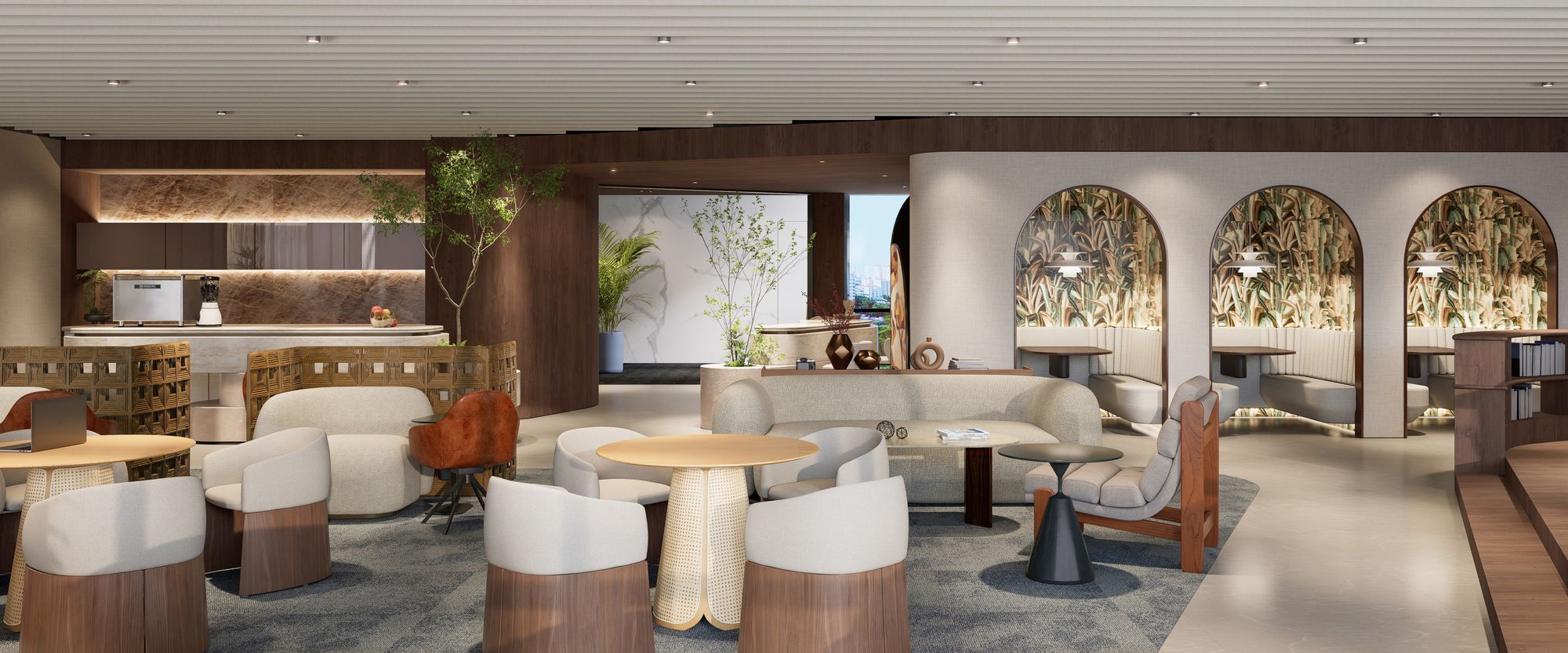
Cosy corners at Arcc Spaces are conducive spots for fostering collaboration and creativity.
The choice of its latest CBD location reflects a consideration for the type of clients that are likely to select a central location. While some corporate offices are moving out of Singapore, others are moving out of the CBD, such as Deloitte which is gradually relocating some of its office locations.
But it remains to be seen whether such moves will become common. Justin Chen, CEO of Arcc Spaces, notes that each office space plays a different role and function, and not every trend will stick. Using the work-from-home arrangements adopted by many companies during the Covid-19 pandemic as an analogy, he points out that the arrangement did not stick with every company.
Justin Chen, CEO of Arcc Spaces, touched on the need for the modern office to create “places where people want to dwell” (Photo: Arcc Spaces)
“What we learned early on is that it worked well for established companies with established teams who already knew each other, had trust, and had strong communication and relationships. When those teams were separated, they could still continue those conversations. But as new employees joined, there were no water-cooler moments to foster relationships. That led to less communication between teams,” says Chen.
When does a CBD office still make sense?
During the launch of its new center at the Bank of Singapore, a panel discussion brought up topics such as the impact of office environments and how it influences employees’ moods and productivity. Crucially, it also took a hard look at whether companies still need a CBD address, against a climate of corporate relocations, rising rental costs and shifting work habits.
Singapore’s stability, neutrality, and governance continue to make it a preferred safe haven and regional hub, reflected in historically low CBD vacancy rates.
Following the pandemic, companies are moving away from the standard 10-year leases toward more intentional, flexible, and human-centric workplace strategies that focus on connection and psychological safety.
A panel session at the launch of Arcc Spaces at the Bank of Singapore explored whether companies today still need an office in Singapore. From left: Dr. Oberdan Marianetti, Principal Psychologist at Dr.OM & Associates; Gwen Tan, Designer Principal at The Afternaut Group; Justin Chen, CEO of Arcc Spaces; Deepshikha Kumar, CEO of SpeakIN (Photo: Arcc Spaces)
No two Arcc Spaces locations are designed the same way. For example, its centre in One Marina Boulevard is designed for adaptability across diverse working styles, while the Bank of Singapore centre takes on a nature-centric approach that encourages employees to take a reprieve from screen-heavy workdays.
For enterprise clients seeking customisable spaces that reflect their corporate identity, the fifth floor at the Bank of Singapore Centre also has custom spatial layouts over 7,000 – 9,000 sq ft floor plates and branded interiors by Arcc Spaces’ in-house design team.
On the sixth floor, there are premium fully furnished private serviced offices for teams of up to 50. The seventh floor is where the heart of the flexible workspace resides, with a communal space that doubles up as a conference hall and coffee bar.
A lush “green zone” with integrated planters that divide workspaces and create a calming natural backdrop in a shared lounge at level 7. (Photo: Arcc Spaces)
For smaller teams and entrepreneurs, the co-working plans offer the benefits of a fully serviced office, meeting space and a community of potential clients and business partners.
In terms of amenities, members get dedicated concierge access, a cafe bar, wellness room, breakout and collaboration spaces and members-only events such as a thought-leadership series with entrepreneurs, changemakers and authors.
Chen says that leading SMEs and corporate tenants now view high-quality office space as an investment in their company’s credibility, culture, and talent. This is something Arcc Spaces wanted to deliver for tenants at its newest location.
On the importance of building tighter relationships between team members, Justin observed that the office plays a role in fostering organic interactions such as “water-cooler” conversations. For the choice of address, the CBD is a strategic location for developing closer ties and credibility with customers. Similarly, it’s also the reason why business travel is back on the radar for companies.
Designing for an intergenerational workforce
As more young people start to enter the workforce, companies will increasingly have to grapple with managing employees that span a wide age range. From the freshest Gen Z graduates, to Millennials, and a handful from the Baby Boomer generation.
As the workplace fills with people cutting across generations, operational flexibility becomes a crucial criteria rather than an option. Employers have to consider how to cater to different groups, such as working Mums to younger employees who prioritise intentional work experiences.
For Arcc Spaces, its newest centre at the Bank of Singapore is a step up from its previous new location at One Marina Boulevard, and there is a greater focus on hospitality that goes beyond workplace design.
Rather than an afterthought, nature features are at the core of Arcc Spaces at the Bank of Singapore. (Photo: Arcc Spaces)
Balancing craftsmanship and materiality, the design includes greenery both indoors and outdoors, and nature-inspired features that create a calming connection to nature within the concrete city.
Flexibility is built into the design process from the start. Phone booths can be converted into multi-use rooms, office suites can be combined as teams grow, and conference rooms can transform into communal spaces after business hours.
This adaptable design allows businesses to respond to changing needs without taking on the costs and disruption of major renovations.
Gwen Tan, designer principal at The Afternaut Group says one of the attributes of the space was the long stretch of windows that allow plenty of daylight. It also sparked the idea to create small pockets of spaces that people can choose from throughout the day to suit their needs — whether having a meal, taking a phone call, or doing quiet work.
“Seeking happiness, balance, and a sense of wellness through real connections is really important in this age. There is no better place than one that makes someone feel at home to some extent,” she says.
The office as a second home
Members can utilise small pockets of spaces throughout the Bank of Singapore centre for breaks or coffee chats.
The office of the future will likely focus less on where people work and more on enabling productivity, collaboration, and innovation regardless of location. Post-pandemic office trends that have emerged include a greater emphasis on employee wellbeing, hospitality-inspired office services and AI-enabled workplace management.
It is not an exaggeration to say that premium flex co-working spaces have evolved far beyond shared desks. This workplace trend and the demand for such spaces reflects changing workforce expectations and supports businesses seeking agility.
As offices become more like experience hubs, premium flexible workspaces are well positioned to support this evolution. By accommodating multiple generations through thoughtful design, technology, and flexibility, these workplaces can foster stronger collaboration and employee satisfaction.
In a nutshell, the future of work in Singapore is unlikely to be defined by a single office model, but rather by creating workplaces that adapt to diverse workers, changing business needs, and new ways of working.