The Assembly Place net profit climbs 80.7% on co-living expansion, looks ahead to 'robust' pipeline
The earnings growth and expansion pipeline signal rising demand and operator confidence in professionally managed co-living, potentially increasing Singapore’s flexible-accommodation supply.
The Assembly Place’s 1H2026 net profit rose 80.7% year on year to $2.2 million, with roughly 2,100 additional keys secured through 2028.
Body
Co-living operator The Assembly Place (TAP) saw improved profitability for the first half of this year amid revenue growth as it continued to expand its core segment of community-driven stays.
It also comes as TAP eyes a “robust” upcoming slate of new projects, with more than 2,100 additional keys in its development pipeline, against a backdrop of growing demand for professionally-managed community living solutions, the company said.
Net profit increased by 80.7% y-o-y to $2.2 million while revenue rose 33.9% to $15.6 million for 1H2026, according to an Aug 7 bourse filing by TAP, which listed on the Catalist board in January.
Read also: JustCo revenue rises 24% to US$80.8 mil in 1H2026; plans expansion to 78 centres
An increase in master lease agreements and a larger portfolio of keys under operation and management were the main reasons for the higher revenue. The group’s total number of keys expanded to 3,520 as at the end of June 2026, from 3,018 a year ago.
Higher rental income during the latest half-year period pushed gross profit up by 22.7% to $11.2 million, even as cost of sales rose 75.1% to $4.4 million.
Looking ahead, its total secured pipeline over the next two years comprises roughly 2,100 keys.
This includes seven properties in Singapore: 282 and 400 River Valley Road; 63 and 65 South Bridge Road; 101 Lavender; 259 Outram; 27 and 29 Lorong 22 Geylang (Dabu); 300-320 Tanglin Road (Phoenix Park); and the recently announced 50 Jalan Harom Setangkai (JHS) acquisition.
In Malaysia, the 66-key Social hotel with co-living elements in Bangsar, Kuala Lumpur, is expected to launch in the second half of 2026.
Eugene Lim, executive director and CEO of TAP, said the first-half performance reflects the scalability and resilience of the group’s community living business platform.
“Through the continued expansion of our master lease portfolio, we increased the number of keys under operation and management, driving healthy revenue growth, strengthening operating cash flow and delivering improved financial performance, despite the one-off IPO-related expenses and continued investments to support our growth,” he noted.
Read also: The Assembly Place enters JV to redevelop Jalan Harom Setangkai site into five terraced houses
Singapore is also seeing demand for flexible accommodation options, as some younger Singaporeans are looking to rent so they can live independently or enjoy greater flexibility.
Earlier this week, Minister for National Development Chee Hong Tat said the government is working with the private sector to explore a wider range of housing typologies such as long-stay serviced apartments and co-living.
TAP said in its Aug 7 filing that such demographic trends “reflect the growing role of co-living and the recognition of professionally-managed community living as part of Singapore’s evolving housing landscape”.
Milestones since the company’s IPO at the start of this year included entering into a strategic joint venture that will operate Singapore’s first purpose-built workers’ dormitory designed around a community-driven concept, at 2 Seletar North Link. This will house about 886 beds and be branded under its new brand, Habitat.
Also in March, TAP acquired 163 Tras Street, an 11-storey freehold commercial building in Singapore earmarked for conversion into a 168-room hotel.
The company in May inked a 15-year lease, with an option for a further five-year renewal, for Char Yong (Dabu) Building on Lorong 22 Geylang. It has about 80 rooms and will become TAP’s flagship AI-powered co-living property.
Read also: Why some young Singaporeans are opting out of the homeownership path
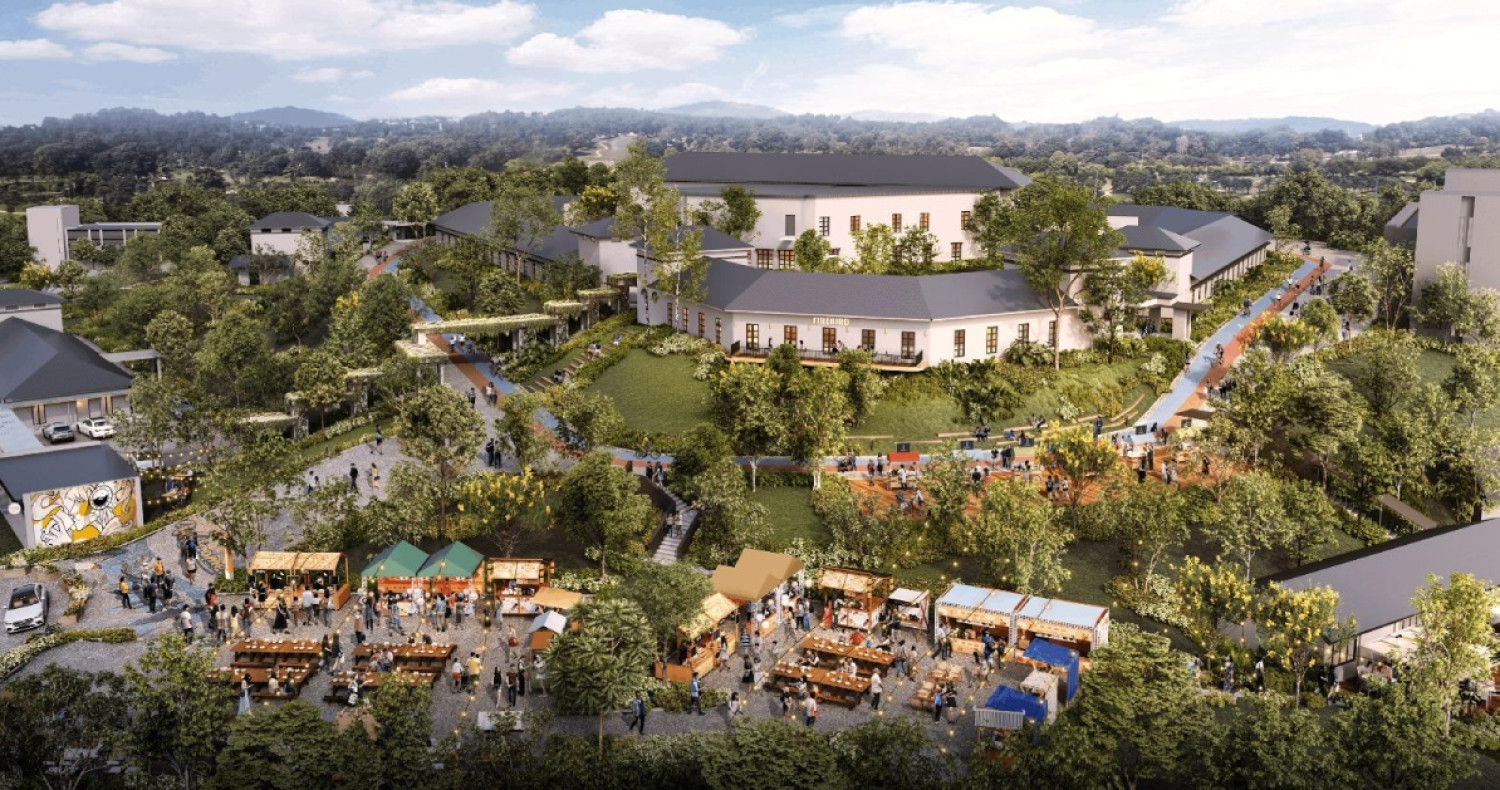
TAP also entered into a strategic joint venture in June to transform the historic Phoenix Park into Singapore’s largest co-living destination, with more than 700 keys and an integrated wellness, F&B and sports lifestyle ecosystem.
Just a day before its 1H2026 earnings release, TAP announced it had taken a 10% stake in a joint venture that has acquired the freehold residential property at 50 Jalan Harom Setangkai. It is located within the Chip Hock Gardens enclave at Gallop Park in prime District 10. The property will be redeveloped into five terraced houses for sale.
Operating an asset-light model with proprietary digital infrastructure, TAP manages more than 3,520 keys at 103 property assets in Singapore, across seven co-living brands.
TAP has three key business segments, one of which is in community-driven stays, whereby it operates and manages co-living assets, as well as provides property management services for mixed-use and commercial properties.
Its other two business segments include other property-related services such as referral services and project management for renovation and refurbishment works; as well as acquiring minority ownership interest in companies that own property assets.
The company declared its inaugural interim dividend of 0.1 cent per ordinary share for 1H2026.
Following its IPO in January this year, TAP has largely preserved the $10.6 million in net proceeds raised. The improved liquidity position reflects the strength of the cash-generative business model, Lim said in the Aug 7 press release.