What Japan's rising land prices really tell us about the property market
The broad recovery signals strengthening demand, while scarce land, higher construction costs and inbound tourism may support well-located older condos and major-city property values.
Japan’s nationwide land prices rose for a fifth consecutive year, with residential and commercial values appreciating and Tokyo and Osaka considerably outpacing the national average.
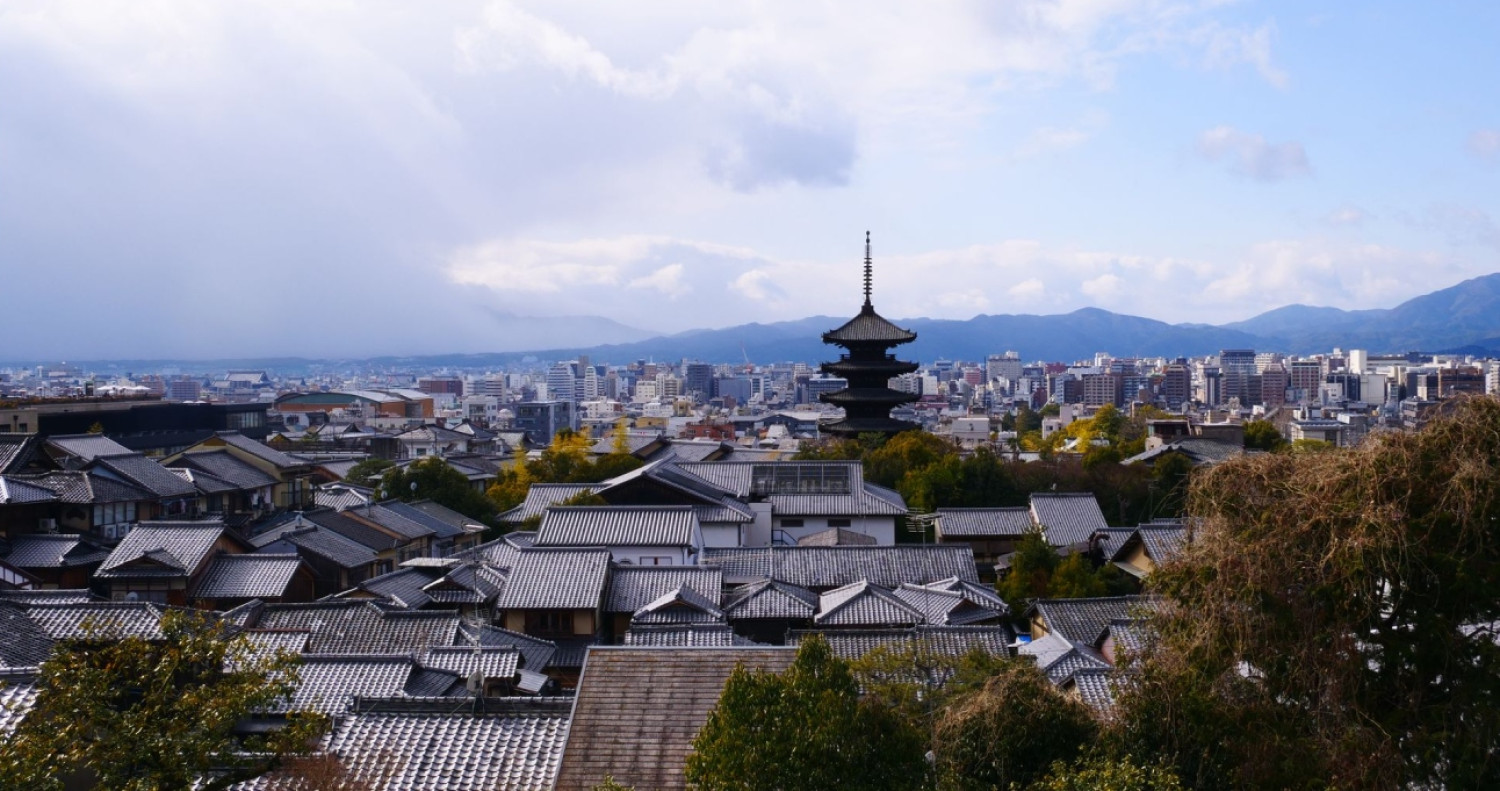
Body
Japan's latest land price data confirms something those of us in the property market have been seeing for some time now. Land prices are rising again, and the recovery is getting broader.
The latest government survey showed nationwide land prices increasing for a fifth consecutive year, with residential and commercial land both appreciating, and particularly strong gains in the major metropolitan areas.
For a country where falling property values shaped investment decisions for decades, that's a meaningful shift.
Read also: Frasers Hospitality opens Fraser Place Roppongi, Tokyo
But the national number hides more than it reveals.
Japan is not one property market. It comprises dozens of them. What moves a residential building in central Tokyo has almost nothing to do with what moves a hotel in Nagoya or a house in a regional city.
Higher costs and the appeal of older condos
In Tokyo, one of the clearest pressures is simply the cost and scarcity of creating new supply in desirable locations.
Well-located land is limited and construction materials, labor and development costs have all risen sharply.
That combination makes it more expensive to build something new, and it raises the value of existing buildings that are structurally sound and well located.
It is part of why we have spent so many years acquiring older condos and renovating them rather than starting from scratch.
New-build condos in central Tokyo tend to be small — developers size units down to hit affordable price points, given how expensive land and construction have become.
Read also: How a Hong Kong property investor still made HK$237 mil — after a 40% price cut
That leaves a gap for buyers who want more space than a new building can offer at a comparable price.
Older condos, many of them originally built with more generous floor plans, fill that gap naturally.
Renovated to reflect what today's buyers actually want — more bathrooms and toilets, for instance — they can be just as compelling as new construction, often at a better price for the space.
How tourism and the weak yen are influencing demand
International visitors have added another layer of demand. According to the Japan National Tourism Organization, Japan welcomed a record 42.68 million international visitors in 2025, up 15.8% from the year before.
That momentum carried into 2026 — July alone brought 3.44 million arrivals, the highest figure ever recorded for that month.
The effect can be seen most clearly in Tokyo, Osaka and Kyoto, where hotels, restaurants and retail now compete directly with residential and commercial users for the same square footage.
In some tourism-heavy markets, the impact on land values has been striking; the latest survey showed particularly strong appreciation in destinations that benefit most from inbound demand.
Read also: Hilton brings Motto brand to Japan with 108-room Kyoto hotel opening in 2029
There is also a less obvious link between tourism and investment. Most international buyers' first exposure to Japanese real estate is simply spending time here — the trains, the safety, the quality of construction, the restaurants and the neighborhoods.
Only later does that familiarity turn into an interest in owning something: a residence, an investment property, or a broader allocation to Japan.
The weak yen has made that conversation an easier one to have. Convert a Tokyo property’s value into Singapore dollars or US dollars and it can look inexpensive next to other major global cities.
But currency is only one part of the case, and it is the part most likely to change. Exchange rates move constantly. A building's location, tenant base and physical condition do not.
That is why, when we look at a property, we spend far more time on the neighborhood and the building than on any macro narrative.
Who wants to live there? How good is the transportation? Is rental demand durable, and how much competing supply could realistically get built nearby? Can the property itself be improved?
Those questions, not the macro numbers, are what decide whether an asset holds up over time.
Closer look at Japan's major property markets
National averages can also be misleading in the other direction — they understate what is happening in the strongest markets.
The 2026 government land survey found that prices in the Tokyo and Osaka metropolitan areas rose considerably faster than the national average.
Tokyo has the underlying fundamentals on its side: a steady inflow of population, a vast employment base, deep housing demand and transportation infrastructure most cities can only aim for.
Osaka is building its own momentum, with substantial investment flowing in.
Kyoto has a different character altogether — global tourism demand running into supply that is unusually constrained by geography and history.
Beyond these three, conditions vary enormously by region.
We have made a bet on that kind of local distinction ourselves. LogProstyle built its business primarily in Greater Tokyo, but this September we completed the acquisition of I-Flatz, a condo sales, renovation and leasing company focusing on Osaka and Kyoto in the Kansai region.
The deal gives us a platform to bring the business model we have proven over the past 20 years in Greater Tokyo to Kansai, Japan's second-largest economic region after Kanto — adapted to how business actually works there, not just copied from Tokyo.
Consumer preferences are different there. So is the available housing stock, tourism patterns, and what you can and cannot build. Real estate investment that ignores those differences does not tend to work out.
What comes next for property investors
Rates are moving too. Japan is stepping away from the extraordinarily loose monetary policy that defined the past few decades.
The Bank of Japan raised its policy rate to 1.25% in September, the highest it's been in 31 years.
Borrowing costs now matter more in every acquisition decision we make.
Still, it is worth keeping in perspective that mortgage rates for buyers remain very low by global standards, even after this normalisation, and our own average cost of debt at LogProstyle is still under 3% — low next to what borrowers face in most other developed markets.
If you are an international investor — and I hear this most often from people looking at Japan out of Singapore — the useful move is to get specific, fast.
A national land-price index tells you which way the wind is blowing. It will not tell you whether a given building, on a given street, with a given tenant base, is actually a good investment.
That is a different question, and it has to be answered property by property.
Five straight years of nationwide increases tell us the recovery has real breadth, not just a few hot spots carrying the average.
What comes next is harder: investors will have to tell markets apart from each other, city by city, and sometimes street by street.
Japan's major cities still have limited supply, international demand and a lot of ageing buildings worth a second look.
Those forces are real. But the opportunities that last will keep coming from the same place they always have — understanding why people actually want to live, visit and invest somewhere.
Yasuyuki Nozawa is representative director, president and CEO of LogProstyle, a Tokyo-headquartered, New York-listed real estate platform spanning condo renovation and resale, residential development, investor-oriented property operations, ryokan hotel operations and restaurant brands.