Winston Lee’s MilikiRumah aims to rehabilitate Indonesia’s mortgage hopefuls
Its credit coaching and 12-month rent-to-own model could expand mortgage access for underbanked buyers, potentially converting previously unqualified demand into new-home transactions.
MilikiRumah has assessed over 50,000 prospective Indonesian homebuyers for nearly 200 projects, with around 15,000 to 17,000 classified as potentially rehabilitatable “amber” borrowers.
Body
In Indonesia, some locals have taken to calling Singaporean entrepreneur Winston Lee’s proptech platform MilikiRumah a rumah sakit, meaning “hospital” in Indonesian.
The patients it treats, however, do not have physical ailments. They are prospective homebuyers with unhealthy credit histories, irregular incomes or too much debt — people whom conventional banks may regard as too risky for a mortgage.
Lee wants to rehabilitate them.
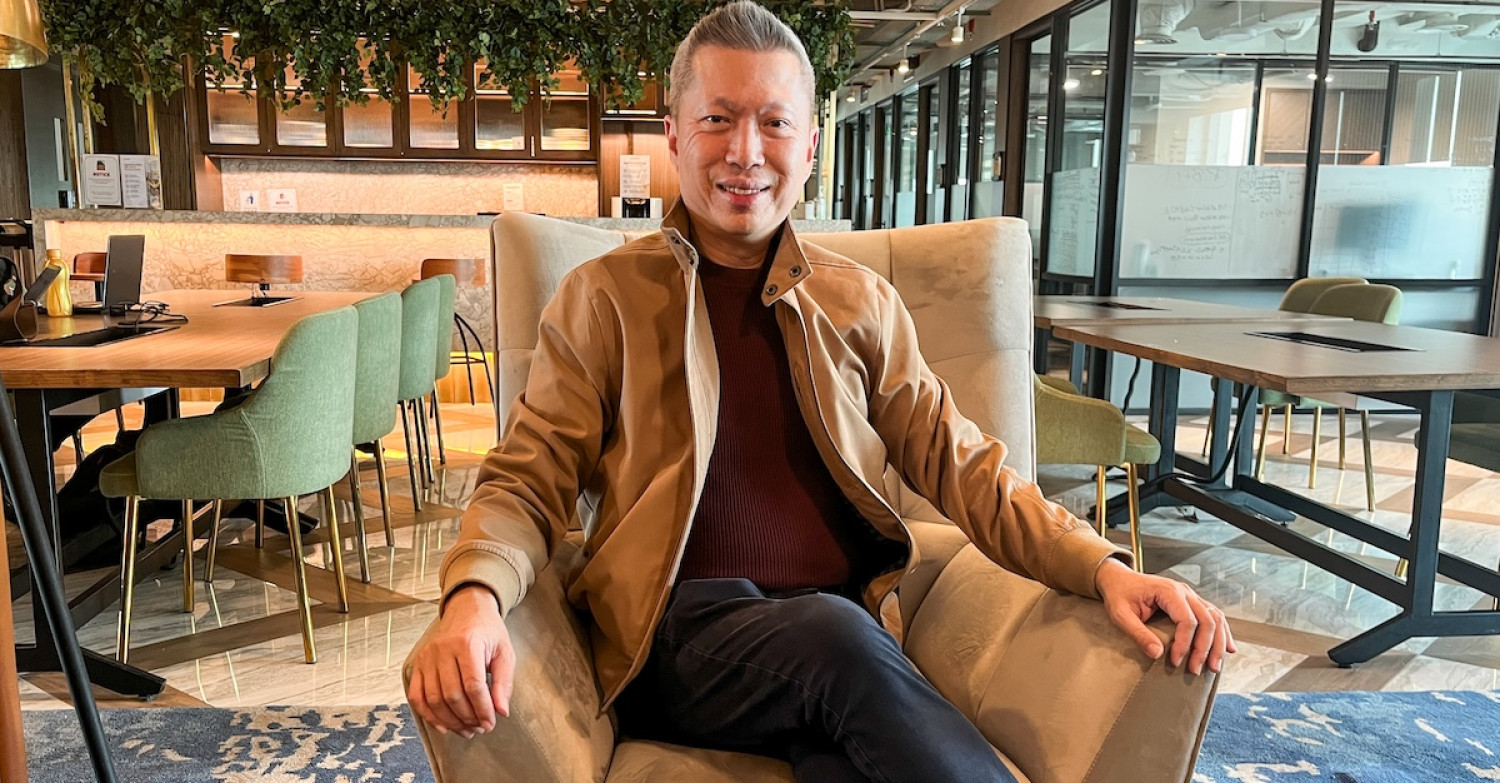
Through MilikiRumah (“to own a home”, in Indonesian), CEO and co-founder Lee is combining AI, financial coaching and a rent-to-own programme to help underbanked Indonesians become “bankable” — and eventually own their first home.
Looking to invest in overseas properties? Explore projects available for sale around the world
“I’m not asking the banks to lower their requirements for the consumers,” says Lee. “I’m raising the standard of consumers to the banks’ requirements.” The approach stems from what he sees as a fundamental gap in Indonesia’s housing and financial systems.
Gap in mortgage financing
While affordability remains an issue, he argues that one of the biggest hurdles to homeownership is gaining access to mortgage financing in the first place.
According to data released by Statistics Indonesia, or Badan Pusat Statistik, on Aug 22, about 12.39% of Indonesian households — or about 9.29 million households — do not own a home in 2026.
The homeownership backlog is particularly acute in Daerah Khusus Ibukota Jakarta, or the Special Capital Region of Jakarta, where 39.36% of households do not own a home, the highest proportion among Indonesia’s provinces.
Lee estimates that about 60% of Indonesians — including entrepreneurs, small-business owners and freelancers — do not have a fixed monthly income. While Statistics Indonesia does not classify workers according to whether their income is fixed or variable, its latest labour-force data shows that 87.74 million people, or about 59.4% of Indonesia’s employed population, were working in the informal sector as at February 2026.
Unlike salaried employees, many in the informal sector, such as street vendors, gig workers and other self-employed individuals, lack payslips or other documentation banks typically rely on to assess a mortgage application, says Lee. Some may operate predominantly in cash, making it harder to document their income even if they earn enough to service a housing loan, he adds.
Read also: Fraxtor co-invests in Greater Osaka's UIB Konan Phase 3 in first JV with listed Reit
Others have accumulated debts or damaged their credit histories through missed or defaulted payments on credit cards, car loans or buy-now-pay-later schemes.
“The irony is that the banks gravitate heavily towards the salaried employee,” says Lee.
It was this gap between the bankable and the unbankable that he set out to address.
Indonesia’s population size was another reason he chose the country as MilikiRumah’s first market. For an AI-based system designed to predict consumer bankability, large volumes of data are critical, and Lee says Indonesia’s large population provided the broad sample pool needed to build and refine its model.
Finding the ‘amber’ borrower
Lee and his team at MilikiRumah spent about a year developing an alternative credit-scoring system to assess prospective homebuyers, using large datasets and AI.
Where a bank might effectively divide borrowers into those who qualify for a mortgage and those who do not, Lee’s system classifies prospective buyers into three categories: green, amber and red, much like traffic lights.
“Green” consumers are considered bankable, while those classified as “red” face more fundamental financial difficulties.
The group Lee sees as having the most potential for his platform is the “amber” segment. He considers them “the underbanked”, as they do not qualify for a mortgage today. However, MilikiRumah believes they could become bankable by reducing debt, improving income documentation, building a payment track record or, in some cases, increasing earnings.
Read also: Radisson to open new hotel in Ungasan, Bali by 2029
Through its business-to-business platform, the company provides housing developers with an assessment of prospective buyers and identifies the financial issues that may be preventing an amber customer from qualifying for a mortgage.
More than 100 property developers have subscribed to MilikiRumah’s platform, which covers nearly 200 new residential projects across Jakarta, East Java and West Java, says Lee.
MilikiRumah has processed more than 50,000 prospective homebuyers so far. Lee says the green, amber and red segments each account for about a third of the total, putting the amber segment at around 15,000 to 17,000.
From scoring to rent-to-own
For a smaller group of borrowers, MilikiRumah has gone a step further.
The company has selected four residential projects where it directly manages borderline borrowers through its proprietary 12-month rent-to-own programme.
Participants make an initial downpayment of about 2% of the home’s purchase price, followed by monthly payments on the property.
Over the course of the programme, MilikiRumah seeks to help participants build up equity equivalent to 5% of the home’s purchase price. At the same time, participants establish a 12-month payment record that can be used to demonstrate their ability to make regular payments.
Participants can then present this payment record to a bank as evidence of their ability to make consistent monthly payments, with the aim of securing a mortgage to purchase the home.
The programme goes beyond collecting payments. Participants must commit to paying down existing debts, building up savings, increasing their income or making other changes needed to improve their financial position.
MilikiRumah’s client advisers — many of them former bankers — monitor participants’ progress.
For business owners, that could also mean establishing more formal financial records by setting up a company or bank account and ensuring their income is properly documented.
“The underlying problem is how to cut down personal debt,” Lee says.
That makes financial literacy as important to the model as technology. He says some consumers may earn relatively good incomes but have accumulated debts far beyond what they can comfortably service. Others have become dependent on short-term borrowing without understanding how that debt could eventually prevent them from securing a home loan.
MilikiRumah therefore sees its role not only as helping people secure mortgages and get a foot on the property ladder, but also as encouraging them to adopt healthier financial habits and maintain a healthy credit profile.
End-to-end homeownership model
Lee is extending the model further. MilikiRumah recently acquired an offline mortgage broker that has relationships with eight Indonesian banks. This allows it to help borrowers refinance after introductory mortgage rates expire and borrowing costs rise.
Published mortgage prime lending rates among major Indonesian banks currently range from about 8% to 10%, excluding promotional discounts and special mortgage packages.
That makes refinancing an important part of the model. For Lee, the aim is not merely to help someone qualify for a mortgage, but also to make sure the homeowner can continue servicing it over the longer term.
However, if participants lose their income and are unable to continue making payments, they may have to leave the programme.
Even so, he says the company intends to provide a “soft landing” for those in such circumstances and allow suitable participants to return to the programme when their financial situation improves.
That balance between social impact and commercial returns is central to how Lee sees the business.
The company is also exploring partnerships with at least three employment agencies. If a rent-to-own participant’s income falls short, Lee hopes to connect them with either a better-paying full-time job or supplementary part-time work. For someone who loses a job altogether, such agencies could provide another route back into the workforce.
“We want to provide them with an additional safety net,” he says.
He is also looking at another round of fundraising and exploring the possibility of acquiring a debt consolidation company in Indonesia.
Lee does not describe MilikiRumah as a social enterprise. Rather, he calls it a “social impact private enterprise” — one intended to demonstrate that a company can make money while tackling a social problem.
“People always think that if you do good, you cannot make money; and if you make money, you cannot do good,” says Lee.
Rightkey Capital, which he founded in April 2024, is headquartered in Singapore and owns and operates MilikiRumah.
The firm’s backers include Singapore-based multi-family office and asset manager Ruifeng Wealth Management, venture capital and private equity (VCPE) firm Tembusu Partners and fund manager Trigger Asset Management. An early investor and shareholder is PropertyGuru co-founder Jani Rautiainen.
Indonesia as proving ground
Lee moved to Jakarta in March 2025 and has been based there since. However, he returns to Singapore once a month to spend time with his family, meet his investors and update them on the company’s progress.
Indonesia — with a population of 287.2 million as at mid-2026, based on Statistics Indonesia data — is the most populous country in Southeast Asia and the fourth most populous in the world, after India, China and the US.
Lee sees similar gaps in access to home financing among underbanked consumers elsewhere in Southeast Asia. Potential markets include the Philippines, with a population of 116 million, followed by Vietnam with 101 million, and Thailand with 71.56 million.
“Our business is really to serve the locals in these respective countries,” says Lee.
These markets lack Singapore’s combination of subsidised public housing scheme and compulsory savings. He wants MilikiRumah to replicate part of the roles HDB and CPF play in Singapore in helping households in these other countries achieve homeownership.
Lee says VCPE firms in the region have already approached the company, although discussions remain exploratory at this stage.
A fascination that began at 12
For Lee, the belief that property ownership can change a family’s financial trajectory is personal. His father was a teacher rather than a businessman or corporate executive, but Lee watched him make what he describes as good property investments and eventually achieve financial independence. That left an indelible impression.
Lee was 12 years old when he began accompanying his father on property viewings. While his friends were playing football, he recalls going through the classified advertisements in the newspaper and circling properties he imagined buying if he had $10 million. Without spreadsheets to track them back then, he kept his calculations on pen and paper.
That childhood fascination eventually developed into a career in real estate technology. Lee later joined PropertyGuru when the company was still young. He gained not only from its employee stock options, he says, but also from watching its founders build the company into one of Singapore’s early technology unicorns.
Years later, his own venture focuses on something very different. Rather than helping people search for property, he is trying to address something more fundamental: whether they can qualify for a mortgage to buy a home at all.
Miliki Rumah’s programmes draw young first-time buyers, entrepreneurs with irregular or non-salaried incomes, and consumers carrying debts from multiple creditors. The largest groups so far, Lee says, are business owners and people struggling with debt.
There are also single mothers navigating divorce proceedings who use the firm’s rent-to-own platform as an interim route to housing while their cases are being resolved.
For Lee, that is where the opportunity — and the social mission — lies.
“Property ownership is the way to improve social mobility,” he says, “and to change the trajectory of the low- to middle-income customers for the next generation.”